
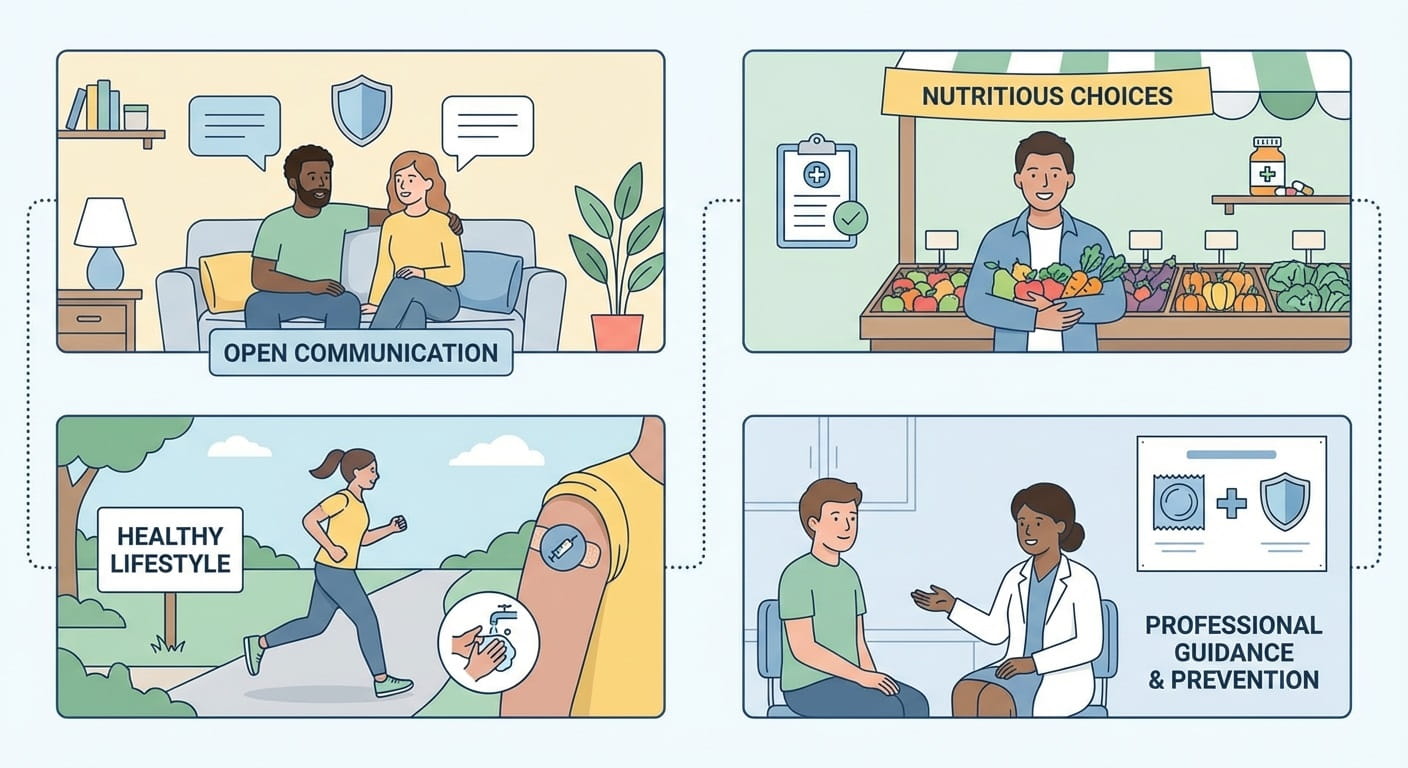
Introduction
Sexually transmitted infections (STIs) such as chlamydia, gonorrhea, herpes, HPV, and HIV pose a serious threat to sexual health and may occur without noticeable symptoms. According to the World Health Organization (WHO, 2023), more than 1 million new STI cases are recorded worldwide every year. Fortunately, a healthy lifestyle can reduce the risk of infection by up to **90%**. This article focuses on practical strategies, including nutrition, hygiene, safe relationships, and daily habits. These recommendations are evidence‑based and are intended to complement medical prevention methods such as condom use and vaccinations.
Understanding STIs and Risk Factors
STIs are primarily transmitted through sexual contact (vaginal, anal, and oral). Risk factors include having multiple sexual partners, unprotected sexual activity, and a weakened immune system. A healthy lifestyle reduces risk by strengthening immunity, lowering inflammation, and promoting safer behaviors. A study published in *The Lancet* (2022) showed that individuals with a healthy lifestyle are **75% less likely** to contract STIs.
## Practical Lifestyle Strategies for Prevention
The strategies are divided into key categories:
1. Strengthening the Immune System Through Nutrition and Exercise
A strong immune system neutralizes viruses and bacteria.
**Vitamin‑rich nutrition:**
– **Vitamin C** (oranges, bell peppers): 200 mg daily reduces infection risk by **30%** (*Journal of Immunology*, 2021).
– **Probiotics** (yogurt, kefir): Maintain vaginal and gut flora balance and help prevent bacterial infections.
– **Zinc and selenium** (nuts, fish): Support white blood cell function.
**Regular physical activity:**
150 minutes of moderate exercise per week (walking, yoga). A study in the *British Journal of Sports Medicine* (2020) showed that athletes are **40% less likely** to contract STIs.
**Adequate sleep:**
7–9 hours per night; sleep deprivation weakens immunity by up to **50%**.
2. Personal Hygiene and Daily Care
Hygiene directly reduces the risk of transmission.
– **Regular washing:** Clean the genital area with lukewarm water and mild soap before and after sexual activity (avoid vaginal douching, which disrupts natural flora).
Cotton underwear:** Breathable and moisture‑absorbing; avoid tight or synthetic clothing.
Skin care:** Use natural moisturizers (e.g., aloe vera) to prevent skin cracks that facilitate pathogen entry.
Oral hygiene:** Daily brushing and flossing; oral infections can transmit STIs.
### 3. Safe Sexual Practices and Partner Management
Safe behaviors are the most critical preventive strategy.
Condoms and dental dams:** Always use them; reduce HIV risk by **85%** and HPV risk by **70%** (CDC, 2023).
– **Limiting the number of partners:** Monogamous relationships or regular testing with a steady partner.
– **Regular screening:** STI testing every 3–6 months, depending on risk level; reminder apps can be helpful.
– **Vaccination:** HPV vaccine (Gardasil) prevents genital warts and related cancers and is up to **90% effective**.
4. Avoiding Aggravating Factors
– **Quit smoking and alcohol:** Smoking doubles the risk of HPV; alcohol impairs judgment and increases risky behaviors.
Stress management:** Meditation or yoga; chronic stress weakens immunity (*Psychoneuroendocrinology*, 2019).
– **Weight control:** Obesity increases inflammation; a balanced diet is beneficial.
Summary of Strategies and Risk Reduction
| Strategy | Practical Example | Risk Reduction (Based on Studies) |
|——–|——————|———————————-|
| Nutrition | Daily vitamin C | 30% |
| Exercise | 30‑minute walk | 40% |
| Hygiene | Genital washing | 50% |
| Safe sex | Condom use | 80–90% |
| Screening | Testing every 6 months | 70% |
Suggested Daily Prevention Plan
– **Morning:** Breakfast with fruit and yogurt (probiotics + vitamin C) + 10 minutes of exercise.
– **Midday:** Lunch with vegetables and fish + personal hygiene.
– **Evening:** STI testing if needed + safe sexual activity with partner.
Night:** Early sleep + avoid alcohol.
Conclusion
A healthy lifestyle—combining proper nutrition, regular exercise, personal hygiene, and safe sexual practices—is the most powerful shield against sexually transmitted infections. The WHO (2023) emphasizes that these strategies can reduce STI prevalence by up to **50%**. Small daily changes ensure long‑term sexual health. For personalized assessment, consult a physician or sexual health clinic. **Prevention is the best treatment—choose a healthy lifestyle.**